

POPULAR
BLOG POSTS


- Ayurvedic Treatment for Fatty Liver: What Really Helps, and What Doesn't
Oct 05, 2026 - Ayurvedic Treatment for Multiple Sclerosis: Supportive Care, Therapies and What to Expect
Sep 29, 2026 - Panchakarma: Vamana, Virechana, Basti, Nasya & Raktamokshana
Sep 28, 2026 - Ayurveda Meditation: Healing the Mind, Body & Consciousness
Sep 27, 2026 - Ayurvedic Treatment for Arthritis: The Role of Diet and Lifestyle
Sep 15, 2026 - Ayurvedic Treatment for PMOS: How Panchakarma and Ayurvedic Fertility Care Support Hormonal Balance
Sep 09, 2026 - Ayurvedic Treatment for Women: Hormones, Hair, Skin, Stress & Fertility
Sep 1, 2026 - Leech Therapy Ayurveda for Varicose Veins: Reduce Pain and Improve Blood Circulation Naturally
Aug 27, 2026 - How Panchakarma Treatment Supports Natural Detoxification and Wellness
Aug 20, 2026 - Kerala Panchakarma for Back Pain and Joint Stiffness
Aug 1, 2026 - Ayurvedic Rejuvenation Treatment: What It Is and How It Works
July 21, 2026 - An Ultimate Guide for Ayurvedic Treatment of Sinusitis and Allergies
July 10, 2026 - How Ayurveda Supports Weight Management Without Dieting
June 30, 2026 - Planning a Karkidaka Chikitsa Retreat in Wayanad, Kerala: A Guide for International Guests
June 22, 2026 - Best Time for Panchakarma in Kerala: Why Choose a Monsoon Ayurveda Detox Retreat?
June 8, 2026 - Heal Naturally with Monsoon Treatments in Ayurveda: A Guide to Karkkidaka Treatment
May 30, 2026 - What is hypertension? Symptoms, causes, and Ayurveda treatments
May 26, 2026 - Why Monsoon is the Best Time for Kizhi Therapy in Ayurveda
May 25, 2026 - Why Shirodhara is Done: 7 Powerful Benefits for Mind & Body
April 17, 2026 - 7 Powerful Benefits of an Ayurveda Retreat
April 17, 2026 - Nasyam: The Ayurvedic Nose Therapy That Clears More Than Congestion
March 10, 2026 - Why One-Size-Fits-All Wellness Fails: A Guide to Your Ayurvedic Body Type
Feb 17, 2026 - Ayurvedic Detox: How to Cleanse Your Body the Natural Way
Feb 17, 2026 - Breathe Easy: Natural Ayurvedic Solutions for Sinus and Cold-Season Problems
Feb 7, 2026 - Living in Balance: A Daily Guide to Yoga and Ayurveda
Jan 12, 2026 - 10 Reasons Why Panchakarma Is the Ultimate Detox
Oct 28, 2025 - From Panchakarma to Peace: A Beginner's Guide to Ayurveda
Aug 30, 2025 - Transformative Healing Through Personalized Ayurveda at Shatavari Ayurveda
July 15, 2025 - Balance Your Doshas with the Seasons: A Fresh Approach to Eating
June 29, 2025 - How Vata, Pitta, and Kapha Influence Your Mind, Body, and Energy ?
June 13, 2025 - Why an Ayurveda Resort in Wayanad Is the Ultimate Wellness Gateway ?
May 29, 2025 - Ayurveda Leech Therapy: A Time-Tested Healing Practice
April 22, 2025 - Cupping Therapy: An Ancient Healing Practice for Modern Health
April 3, 2025 - Ayurveda for Mental Wellness: Healing Stress and Anxiety Naturally
March 8, 2025 - The Science Behind the Healing Power of Ayurveda
Feb 20, 2025 - Panchakarma: Five Ayurvedic Therapies for Effective Detoxification
Feb 11, 2025 - Why Ayurveda Could Be Europe’s Hottest Wellness Trend ?
Jan 22, 2025 - Yoga for Health: A Path to Physical and Mental Well-being
Aug 16, 2024 - Ayurveda in Europe: Integrating Eastern Medicine into Western Lifestyles
Aug 16, 2024 - Wayanad United: Shatavari Ayurveda’s Commitment to Healing and Hope
Aug 16, 2024 - Ayurveda: Science of Life - Ancient Wisdom for Contemporary Health
Aug 8, 2024 - Kerala Wellness Centres_ Your Guide to Ayurvedic Detox and Rejuvenation
Jul 20, 2024 - How My Visit to an Ayurveda Retreat Centre Transformed My Life ?
Jul 18, 2024 - What is an Ayurveda Retreat?
Jul 13, 2024 - Shatkarma and Its Role in Modern Yoga Practice
Jul 10, 2024 - Best Ayurvedic Package for Women
Aug 3, 2023 - Yoga: A Holistic Way to Boost Your Respiratory Health and Overall Well-being
Jul 28, 2023 - Does Yoga Improve Lung Function?
Jul 5, 2023 - Best Ayurvedic Treatment for Stress
June 20, 2023 - Where to Get an Ayurvedic Consultation in Europe?
June 26, 2023 - How Is Ayurveda Beneficial For Arthritis?
June 18, 2023 - The Role of Ayurveda In the Constitution of The Body
June 1, 2023 - Which Is the Best Ayurvedic Treatment Centre in Kerala?
May 30, 2023 - The Healing Power of Food
May 23, 2023 - Ayurveda: Ancient Wisdom for Modern Well-Being
May 18, 2023 - Ayurveda's Simple Ways to Reduce Stress
May 2, 2023 - Ayurveda's Ancient Magic Meets Modern Living
April 20, 2023 - Ayurvedic Immunity Boosting Measures
Mar 31, 2023 - Ayurvedic Treatment for Post-Covid Health
Mar 25, 2023 - Indian Spirituality
Mar 13, 2023 - Does Ayurveda Treat Weight Loss?
Feb 21, 2023 - Ayurveda Doctor in Europe
Feb 5, 2023 - Ayurveda Treatments in India: How to Get an Online Medical Visa?
Jan 24, 2023 - Kerala Ayurvedic Centre
Dec 10, 2022 - Ayurvedic Spa Treatments
Nov 25, 2022 - Ayurvedic Capsules for Good Health
Oct 10, 2022 - How Can Ayurvedic Treatment Help People with Diabetes?
Jun 3, 2022 - Why Is Kerala Considered the Ideal Destination for Ayurvedic Treatment?
May 10, 2022
Ayurvedic Treatment for Multiple Sclerosis: Supportive Care, Therapies and What to Expect
Sep 29, 2026
Medically reviewed by Dr Arun V Nair, BAMS, Chief Medical Consultant.
No two people experience multiple sclerosis (MS) the same way. One person wakes up tired no matter how long they slept. Another struggles with stiff legs, or a hand that tingles for days, or vision that suddenly blurs. And the symptoms that bother you this year may not be the ones that bother you next year.
Your neurologist and your medical treatment come first. That doesn't change. But many of the people who come to us are also looking for something more: a way to feel steadier, sleep better and take some control back over their day. That's the space where Ayurvedic treatment for multiple sclerosis can help, as support alongside your medical care, not a replacement for it.
Below, we'll walk you through what MS is, how Ayurveda looks at it, the therapies our doctors may suggest, and what a stay with us at Shatavari Ayurveda, our Ayurvedic resort in Kerala's Wayanad hills, actually looks like.
What Is Multiple Sclerosis?
MS is a long-term condition of the central nervous system, meaning the brain and spinal cord. It's thought to be autoimmune. In simple terms, the immune system gets confused and attacks myelin, the protective coating that wraps around nerve fibres. Once that coating is damaged, messages between the brain and body travel slowly, or don't get through at all.
Nobody knows exactly what triggers it yet. There's no cure either. What modern medicine can do is manage the condition and help reduce relapses, which is why your neurologist matters so much.
Common Symptoms of MS
- Deep fatigue that rest doesn't fix
- Numbness or pins and needles in the arms or legs
- Weak, stiff or spasming muscles
- Trouble with balance, coordination or walking
- Blurred or double vision
- Pain and feeling worse in the heat
- Foggy thinking or memory lapses
- Low mood, anxiety or broken sleep
Who Should You See for MS?
A neurologist. They're the right person to diagnose MS and manage its medical treatment. If you're thinking about Ayurveda, talk to them about it first. The best results come when both sides know what the other is doing.
How Ayurveda Looks at MS
You won't find "multiple sclerosis" in the classical Ayurvedic texts. There's no single matching term. So our doctors work from the symptoms themselves. Numbness, weakness, stiffness, tremor, poor coordination: in Ayurveda, these point towards an imbalance of Vata dosha, the force behind movement and nerve function.
They'll also look at Majja dhatu (the tissue linked to the nervous system), how well you digest food (Agni), how stressed you are and what your days look like. It's a whole-person view. The symptoms matter, but so does everything around them.
MS care at Shatavari Ayurveda sits within our broader work in Ayurvedic Treatment for Neurological Problems. The principle is the same throughout: the plan is built around you, your history and the medical care you're already receiving.
Ayurvedic Therapies Our Doctors May Suggest
We don't have an "MS package," and honestly, we don't think one should exist. Before anything is planned, a doctor sits down with you, goes through your medical records and current medicines, examines you, and reads your pulse and tongue the traditional way. What follows depends on what they find.
1. A Plan Built Around You
Someone who's exhausted by lunchtime needs a very different plan from someone whose main problem is stiff, aching legs. Your doctor takes that into account. If herbal medicines are part of the plan, they're prepared in our own pharmacy and given only under medical supervision.
2. Warm Oil Therapies
These are often the part guests remember most.
Abhyanga is a full-body massage with warm medicated oil. It's one of Ayurveda's classic ways to settle Vata, and many people find it eases muscle tension.
Pizhichil takes that further. Warm medicated oil is poured over your body in a steady flow while you're gently massaged. It's traditionally used to ease stiffness and tension in the nerves and muscles.
Shirodhara is a slow, steady stream of warm oil poured across the forehead. Guests often say it's the calmest they've felt in months, and it's widely used to support sleep.
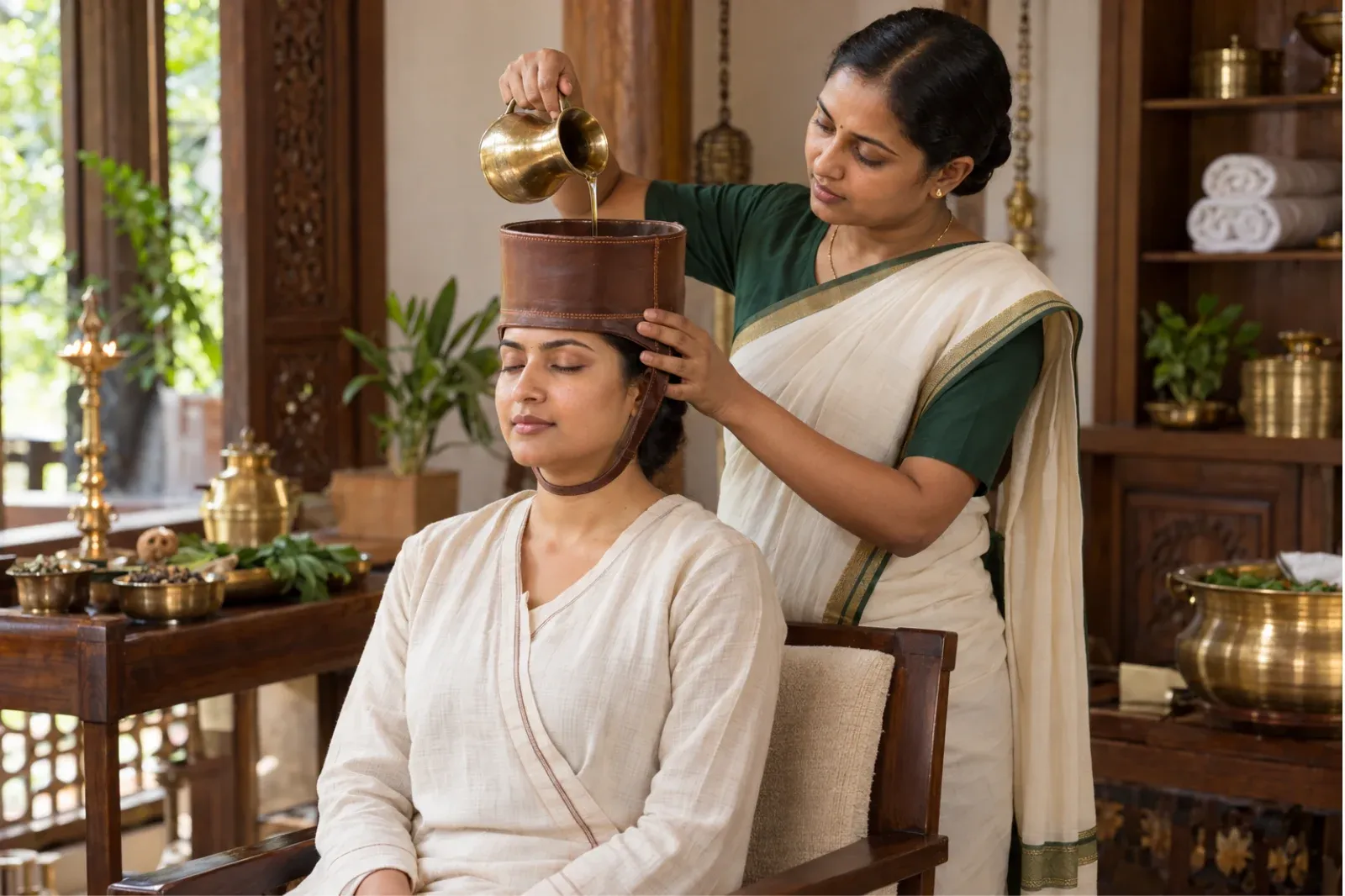
Shirovasti keeps medicated oil on the head for a set period. Traditionally, it's used for anxiety, headaches and trouble sleeping.
3. Panchakarma
Panchakarma is Ayurveda's classical five-part cleansing system. With neurological conditions, two procedures come up most often.Basti, a medicated oil or herbal enema, is considered the most important therapy for Vata. Nasyadelivers medicated oil through the nose and is traditionally used for conditions of the head and nerves.
A word of caution, though. Panchakarma isn't right for everyone. It can be physically demanding, and whether it suits you depends on your strength and how stable your condition is. Only your Ayurvedic physician can make that call. If it is recommended, plan on staying at least 14 nights.
Diet, Yoga and Everyday Habits
What You Eat
In Ayurveda, the kitchen is part of the treatment room. Meals here are vegetarian, cooked fresh each day, and made with organic ingredients. Your doctor adjusts what's on your plate to suit your body type and digestion. For Vata-related conditions, that usually means warm, light food that's easy on the stomach. Think soft rice dishes, soups and gently spiced vegetables rather than anything cold, raw or heavy.
Already on a special diet or taking supplements for MS? Let both your neurologist and your Ayurvedic doctor know before changing anything.
Yoga and Gentle Movement
Yoga therapy can help with flexibility, breathing and relaxation. But with MS, the practice has to fit the person, not the other way round.
If fatigue is your biggest problem, sessions stay short and gentle, with chair support and plenty of rest. If balance is the issue, you'll work near a wall or with props, always with a trained instructor beside you. And if heat makes your symptoms flare, which is common with MS, classes are kept calm and cool so you don't overheat.
Stress and Sleep
Stress and bad nights make everything harder. Breathing practices (pranayama), meditation and Yoga Nidra help many of our guests switch off and sleep more deeply. We'll be straight with you: these practices support your well-being. They don't treat or cure MS.
Why People Choose Shatavari Ayurveda
We're tucked into the forested hills of Mananthavady, in Wayanad. It's quiet here, the air is clean, and the climate is gentle. For an Ayurvedic resort in Kerala,that setting matters. It's much easier to rest and stick to a routine when there's nothing pulling you away.
But the setting is only part of it. Every treatment plan is overseen by BAMS-qualified Ayurvedic doctors. Your plan is based on your medical records, your examination and whatever treatment you've had before. Herbal medicines are made in-house from herbs we grow or source locally. Therapies, yoga, meditation and meals all fit into one daily rhythm, so nothing feels disconnected. And when you go home, we stay in touch through online follow-up consultations for three months.
What a Stay Looks Like
- Before you arrive, you'll send us your medical records and a list of your current medicines. On your first day, a doctor assesses you in person.
- Your plan is then set: which therapies, what you'll eat and which yoga sessions suit you.
- Each day follows a steady routine of treatments, yoga and meals. Everything runs under the supervision of our doctors throughout your stay.
- When you leave, you'll take home guidance on diet, routine and any herbal support, which you can share with your neurologist.
Stays run for 7, 14, 21 or 28 nights. Not sure how long you need? Your doctor will suggest a length once they've looked at your case.
Keeping It Safe
A few ground rules we ask every guest with MS to follow. Keep taking your prescribed MS medication, and don't stop or change it unless your neurologist says so. Tell your neurologist about any Ayurvedic herbs or medicines you're using, so they can watch for interactions. Only take herbal medicines prescribed by a qualified Ayurvedic doctor. And give your Ayurvedic doctor your full medical history before any therapy starts. Nothing should be a surprise to either side.
When to Get Medical Help Straight Away
Don't wait if you notice any of these. Contact your neurologist or get medical care immediately:
- New or worsening problems with your vision
- New muscle weakness, or weakness that's getting worse
- Sudden trouble walking, or losing your coordination
- Any other neurological symptom that's new or getting worse quickly
Questions People Often Ask Us
Can Ayurveda cure multiple sclerosis?
No, and you should be wary of anyone who says it can. MS has no known cure in any system of medicine. Ayurvedic treatment for multiple sclerosis is about helping you feel better day-to-day: more energy, better sleep, less tension. It works alongside your medical care.
Is Ayurvedic treatment safe if I have MS?
It depends on you. Your stage of MS, your current health and the therapies being considered all make a difference. That's exactly why we never start treatment without a proper assessment, and why we want your neurologist in the loop.
Can I keep taking my MS medication?
Yes, and you should. Nothing we offer replaces your medical treatment.
Is yoga okay for people with MS?
Usually, yes, as long as your condition is stable and the practice is adapted for you. A trained instructor should guide you, and it's a good idea to let your healthcare team know.
How long should I stay?
Anywhere from 7 to 28 nights, depending on your plan. If Panchakarma is part of it, you'll typically need 14 nights or more. Your doctor will help you decide.
Is Panchakarma suitable for everyone with MS?
No. It can take a lot out of you physically. Your Ayurvedic doctor will decide whether it suits you and, if so, which procedures make sense.
Let's Talk About Your Situation
Everyone's MS is different, so every plan we make is different too. If you're wondering whether Ayurvedic treatment for multiple sclerosis could help you feel better, the easiest first step is a conversation. Send us your medical records, and one of our doctors will go through them and talk honestly with you about what might suit you and what might not.
Get in touch to book a consultation. You can also call us on +91 8590232424.
POPULAR
BLOG POSTS
- Ayurvedic Treatment for Fatty Liver: What Really Helps, and What Doesn't
Oct 05, 2026 - Ayurvedic Treatment for Multiple Sclerosis: Supportive Care, Therapies and What to Expect
Sep 29, 2026 - Panchakarma: Vamana, Virechana, Basti, Nasya & Raktamokshana
Sep 28, 2026 - Ayurveda Meditation: Healing the Mind, Body & Consciousness
Sep 27, 2026 - Ayurvedic Treatment for Arthritis: The Role of Diet and Lifestyle
Sep 15, 2026 - Ayurvedic Treatment for PMOS: How Panchakarma and Ayurvedic Fertility Care Support Hormonal Balance
Sep 09, 2026 - Ayurvedic Treatment for Women: Hormones, Hair, Skin, Stress & Fertility
Sep 1, 2026 - Leech Therapy Ayurveda for Varicose Veins: Reduce Pain and Improve Blood Circulation Naturally
Aug 27, 2026 - How Panchakarma Treatment Supports Natural Detoxification and Wellness
Aug 20, 2026 - Kerala Panchakarma for Back Pain and Joint Stiffness
Aug 1, 2026 - Ayurvedic Rejuvenation Treatment: What It Is and How It Works
July 21, 2026 - An Ultimate Guide for Ayurvedic Treatment of Sinusitis and Allergies
July 10, 2026 - How Ayurveda Supports Weight Management Without Dieting
June 30, 2026 - Planning a Karkidaka Chikitsa Retreat in Wayanad, Kerala: A Guide for International Guests
June 22, 2026 - Best Time for Panchakarma in Kerala: Why Choose a Monsoon Ayurveda Detox Retreat?
June 8, 2026 - Heal Naturally with Monsoon Treatments in Ayurveda: A Guide to Karkkidaka Treatment
May 30, 2026 - What is hypertension? Symptoms, causes, and Ayurveda treatments
May 26, 2026 - Why Monsoon is the Best Time for Kizhi Therapy in Ayurveda
May 25, 2026 - Why Shirodhara is Done: 7 Powerful Benefits for Mind & Body
April 17, 2026 - 7 Powerful Benefits of an Ayurveda Retreat
April 17, 2026 - Nasyam: The Ayurvedic Nose Therapy That Clears More Than Congestion
March 10, 2026 - Why One-Size-Fits-All Wellness Fails: A Guide to Your Ayurvedic Body Type
Feb 17, 2026 - Ayurvedic Detox: How to Cleanse Your Body the Natural Way
Feb 17, 2026 - Breathe Easy: Natural Ayurvedic Solutions for Sinus and Cold-Season Problems
Feb 7, 2026 - Living in Balance: A Daily Guide to Yoga and Ayurveda
Jan 12, 2026 - 10 Reasons Why Panchakarma Is the Ultimate Detox
Oct 28, 2025 - From Panchakarma to Peace: A Beginner's Guide to Ayurveda
Aug 30, 2025 - Transformative Healing Through Personalized Ayurveda at Shatavari Ayurveda
July 15, 2025 - Balance Your Doshas with the Seasons: A Fresh Approach to Eating
June 29, 2025 - How Vata, Pitta, and Kapha Influence Your Mind, Body, and Energy ?
June 13, 2025 - Why an Ayurveda Resort in Wayanad Is the Ultimate Wellness Gateway ?
May 29, 2025 - Ayurveda Leech Therapy: A Time-Tested Healing Practice
April 22, 2025 - Cupping Therapy: An Ancient Healing Practice for Modern Health
April 3, 2025 - Ayurveda for Mental Wellness: Healing Stress and Anxiety Naturally
March 8, 2025 - The Science Behind the Healing Power of Ayurveda
Feb 20, 2025 - Panchakarma: Five Ayurvedic Therapies for Effective Detoxification
Feb 11, 2025 - Why Ayurveda Could Be Europe’s Hottest Wellness Trend ?
Jan 22, 2025 - Yoga for Health: A Path to Physical and Mental Well-being
Aug 16, 2024 - Ayurveda in Europe: Integrating Eastern Medicine into Western Lifestyles
Aug 16, 2024 - Wayanad United: Shatavari Ayurveda’s Commitment to Healing and Hope
Aug 16, 2024 - Ayurveda: Science of Life - Ancient Wisdom for Contemporary Health
Aug 8, 2024 - Kerala Wellness Centres_ Your Guide to Ayurvedic Detox and Rejuvenation
Jul 20, 2024 - How My Visit to an Ayurveda Retreat Centre Transformed My Life ?
Jul 18, 2024 - What is an Ayurveda Retreat?
Jul 13, 2024 - Shatkarma and Its Role in Modern Yoga Practice
Jul 10, 2024 - Best Ayurvedic Package for Women
Aug 3, 2023 - Yoga: A Holistic Way to Boost Your Respiratory Health and Overall Well-being
Jul 28, 2023 - Does Yoga Improve Lung Function?
Jul 5, 2023 - Best Ayurvedic Treatment for Stress
June 20, 2023 - Where to Get an Ayurvedic Consultation in Europe?
June 26, 2023 - How Is Ayurveda Beneficial For Arthritis?
June 18, 2023 - The Role of Ayurveda In the Constitution of The Body
June 1, 2023 - Which Is the Best Ayurvedic Treatment Centre in Kerala?
May 30, 2023 - The Healing Power of Food
May 23, 2023 - Ayurveda: Ancient Wisdom for Modern Well-Being
May 18, 2023 - Ayurveda's Simple Ways to Reduce Stress
May 2, 2023 - Ayurveda's Ancient Magic Meets Modern Living
April 20, 2023 - Ayurvedic Immunity Boosting Measures
Mar 31, 2023 - Ayurvedic Treatment for Post-Covid Health
Mar 25, 2023 - Indian Spirituality
Mar 13, 2023 - Does Ayurveda Treat Weight Loss?
Feb 21, 2023 - Ayurveda Doctor in Europe
Feb 5, 2023 - Ayurveda Treatments in India: How to Get an Online Medical Visa?
Jan 24, 2023 - Kerala Ayurvedic Centre
Dec 10, 2022 - Ayurvedic Spa Treatments
Nov 25, 2022 - Ayurvedic Capsules for Good Health
Oct 10, 2022 - How Can Ayurvedic Treatment Help People with Diabetes?
Jun 3, 2022 - Why Is Kerala Considered the Ideal Destination for Ayurvedic Treatment?
May 10, 2022