

POPULAR
BLOG POSTS


- Ayurvedic Treatment for Fatty Liver: What Really Helps, and What Doesn't
Oct 05, 2026 - Ayurvedic Treatment for Multiple Sclerosis: Supportive Care, Therapies and What to Expect
Sep 29, 2026 - Panchakarma: Vamana, Virechana, Basti, Nasya & Raktamokshana
Sep 28, 2026 - Ayurveda Meditation: Healing the Mind, Body & Consciousness
Sep 27, 2026 - Ayurvedic Treatment for Arthritis: The Role of Diet and Lifestyle
Sep 15, 2026 - Ayurvedic Treatment for PMOS: How Panchakarma and Ayurvedic Fertility Care Support Hormonal Balance
Sep 09, 2026 - Ayurvedic Treatment for Women: Hormones, Hair, Skin, Stress & Fertility
Sep 1, 2026 - Leech Therapy Ayurveda for Varicose Veins: Reduce Pain and Improve Blood Circulation Naturally
Aug 27, 2026 - How Panchakarma Treatment Supports Natural Detoxification and Wellness
Aug 20, 2026 - Kerala Panchakarma for Back Pain and Joint Stiffness
Aug 1, 2026 - Ayurvedic Rejuvenation Treatment: What It Is and How It Works
July 21, 2026 - An Ultimate Guide for Ayurvedic Treatment of Sinusitis and Allergies
July 10, 2026 - How Ayurveda Supports Weight Management Without Dieting
June 30, 2026 - Planning a Karkidaka Chikitsa Retreat in Wayanad, Kerala: A Guide for International Guests
June 22, 2026 - Best Time for Panchakarma in Kerala: Why Choose a Monsoon Ayurveda Detox Retreat?
June 8, 2026 - Heal Naturally with Monsoon Treatments in Ayurveda: A Guide to Karkkidaka Treatment
May 30, 2026 - What is hypertension? Symptoms, causes, and Ayurveda treatments
May 26, 2026 - Why Monsoon is the Best Time for Kizhi Therapy in Ayurveda
May 25, 2026 - Why Shirodhara is Done: 7 Powerful Benefits for Mind & Body
April 17, 2026 - 7 Powerful Benefits of an Ayurveda Retreat
April 17, 2026 - Nasyam: The Ayurvedic Nose Therapy That Clears More Than Congestion
March 10, 2026 - Why One-Size-Fits-All Wellness Fails: A Guide to Your Ayurvedic Body Type
Feb 17, 2026 - Ayurvedic Detox: How to Cleanse Your Body the Natural Way
Feb 17, 2026 - Breathe Easy: Natural Ayurvedic Solutions for Sinus and Cold-Season Problems
Feb 7, 2026 - Living in Balance: A Daily Guide to Yoga and Ayurveda
Jan 12, 2026 - 10 Reasons Why Panchakarma Is the Ultimate Detox
Oct 28, 2025 - From Panchakarma to Peace: A Beginner's Guide to Ayurveda
Aug 30, 2025 - Transformative Healing Through Personalized Ayurveda at Shatavari Ayurveda
July 15, 2025 - Balance Your Doshas with the Seasons: A Fresh Approach to Eating
June 29, 2025 - How Vata, Pitta, and Kapha Influence Your Mind, Body, and Energy ?
June 13, 2025 - Why an Ayurveda Resort in Wayanad Is the Ultimate Wellness Gateway ?
May 29, 2025 - Ayurveda Leech Therapy: A Time-Tested Healing Practice
April 22, 2025 - Cupping Therapy: An Ancient Healing Practice for Modern Health
April 3, 2025 - Ayurveda for Mental Wellness: Healing Stress and Anxiety Naturally
March 8, 2025 - The Science Behind the Healing Power of Ayurveda
Feb 20, 2025 - Panchakarma: Five Ayurvedic Therapies for Effective Detoxification
Feb 11, 2025 - Why Ayurveda Could Be Europe’s Hottest Wellness Trend ?
Jan 22, 2025 - Yoga for Health: A Path to Physical and Mental Well-being
Aug 16, 2024 - Ayurveda in Europe: Integrating Eastern Medicine into Western Lifestyles
Aug 16, 2024 - Wayanad United: Shatavari Ayurveda’s Commitment to Healing and Hope
Aug 16, 2024 - Ayurveda: Science of Life - Ancient Wisdom for Contemporary Health
Aug 8, 2024 - Kerala Wellness Centres_ Your Guide to Ayurvedic Detox and Rejuvenation
Jul 20, 2024 - How My Visit to an Ayurveda Retreat Centre Transformed My Life ?
Jul 18, 2024 - What is an Ayurveda Retreat?
Jul 13, 2024 - Shatkarma and Its Role in Modern Yoga Practice
Jul 10, 2024 - Best Ayurvedic Package for Women
Aug 3, 2023 - Yoga: A Holistic Way to Boost Your Respiratory Health and Overall Well-being
Jul 28, 2023 - Does Yoga Improve Lung Function?
Jul 5, 2023 - Best Ayurvedic Treatment for Stress
June 20, 2023 - Where to Get an Ayurvedic Consultation in Europe?
June 26, 2023 - How Is Ayurveda Beneficial For Arthritis?
June 18, 2023 - The Role of Ayurveda In the Constitution of The Body
June 1, 2023 - Which Is the Best Ayurvedic Treatment Centre in Kerala?
May 30, 2023 - The Healing Power of Food
May 23, 2023 - Ayurveda: Ancient Wisdom for Modern Well-Being
May 18, 2023 - Ayurveda's Simple Ways to Reduce Stress
May 2, 2023 - Ayurveda's Ancient Magic Meets Modern Living
April 20, 2023 - Ayurvedic Immunity Boosting Measures
Mar 31, 2023 - Ayurvedic Treatment for Post-Covid Health
Mar 25, 2023 - Indian Spirituality
Mar 13, 2023 - Does Ayurveda Treat Weight Loss?
Feb 21, 2023 - Ayurveda Doctor in Europe
Feb 5, 2023 - Ayurveda Treatments in India: How to Get an Online Medical Visa?
Jan 24, 2023 - Kerala Ayurvedic Centre
Dec 10, 2022 - Ayurvedic Spa Treatments
Nov 25, 2022 - Ayurvedic Capsules for Good Health
Oct 10, 2022 - How Can Ayurvedic Treatment Help People with Diabetes?
Jun 3, 2022 - Why Is Kerala Considered the Ideal Destination for Ayurvedic Treatment?
May 10, 2022
Kerala Panchakarma for Back Pain and Joint Stiffness
Aug 1, 2026
To address back pain, stiffness, and limited movement of the joints, Kerala Panchakarma treatment uses customized Ayurveda therapies, medicated oils, herbal formulations, and therapies and workshops on the right lifestyle. Your individual case should determine if the treatment is appropriate.
This article is for your information only and does not provide any form of medical recommendation. You should always consult your doctor for any health issues.
Chronic back pain and joint stiffness affect the quality of everyday life for millions of people around the world. Ayurveda treatment for back pain in Kerala is becoming more popular, especially the Panchakarma method, which is a guided and structured method.
What Is Kerala Panchakarma Treatment?
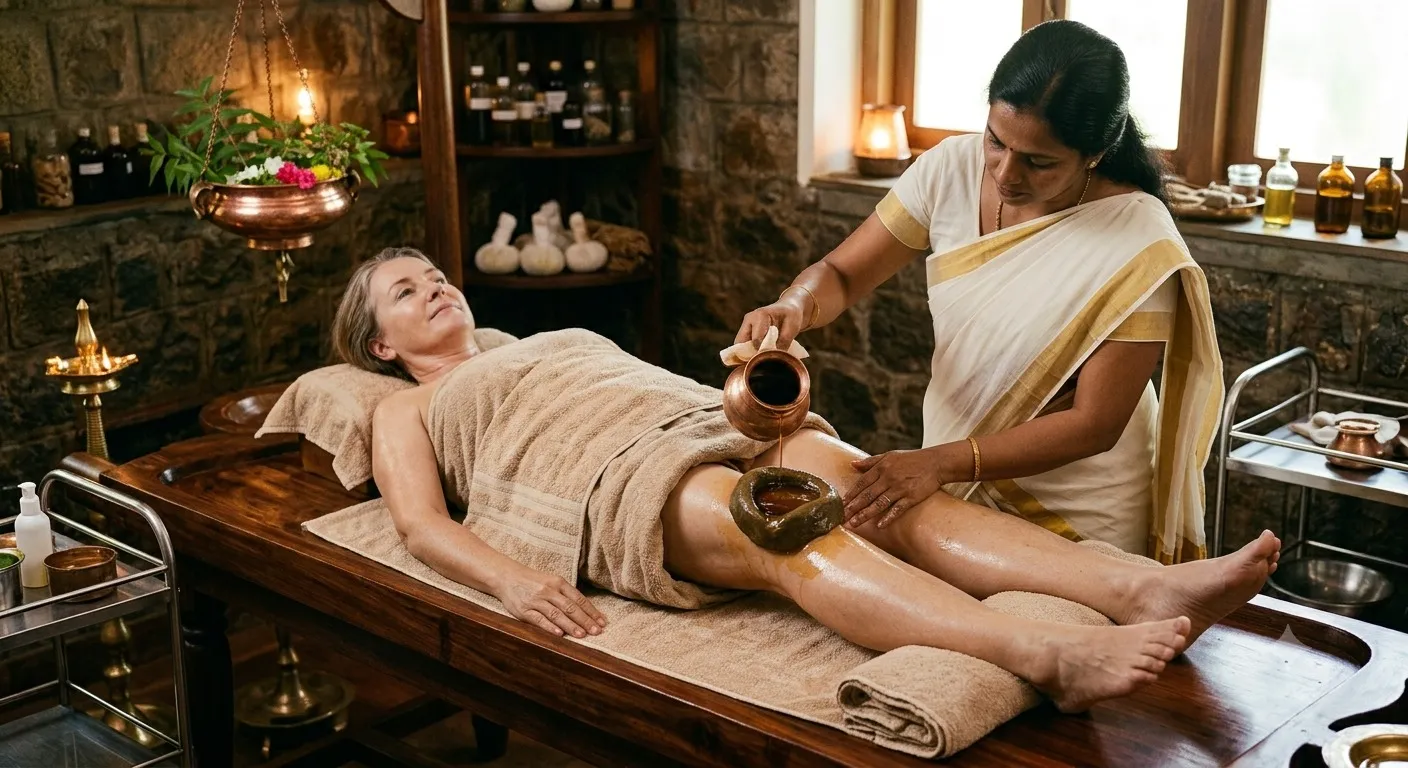
Kerala Panchakarma treatment is a guided, multi-day physician- led therapy program. This method may use a series of preparatory therapies, medicated oils, therapeutic heat, specific cleansing procedures, and kitchen and diet therapy, as well as the physician’s post treatment precautions. It is not a single massage session.
Kerala is known for its Ayurvedic traditions, its trained practitioners, and its region-specific medicated oils. Because of this, Kerala is a center for this type of care; however, the quality of care differs greatly between clinics. Always check the credentials of the practitioners and ensure a thorough individual assessment is performed.
Therapies Commonly Used for Back Pain and Joint Stiffness
| Therapy | Traditional purpose | Key precautions |
|---|---|---|
| Abhyanga | Medicated oil massage to support relaxation and ease stiffness | Not suitable for all spinal conditions |
| Kati Basti | Warm oil retained over the lower back | Requires physician assessment |
| Kizhi | Herbal poultice with therapeutic heat | Temperature and skin sensitivity must be checked |
| Pizhichil | Controlled warm oil application | Suitable only for selected patients |
| Swedana | Therapeutic fomentation following oil therapy | Not universally appropriate |
What distinguishes Kati Basti and Janu Basti?
These treatments are often confused with one another. Kati Basti involves the retention of warm medicated oil in the lower-back region. Whereas Janu Basti is applied to the knee region.
Janu Basti is an external Ayurvedic treatment that involves retention of warm medicated oil in the knee within a specifically constructed boundary for a given period of time. It is utilized for knee pain, stiffness, and reduced range of motion, however does not address back pain. If your focus in researching Panchakarma is for back pain, Kati Basti is the more appropriate specific therapy.
How are Ayurvedic Medicines for Joint Pain Determined?
There is no one best Ayurvedic medicine that can be prescribed for joint pain. It is determined by the cause of the symptoms, the specific joint that is affected, the patient’s history, their currently prescribed medications and any potential interactions with the drugs and herbs.
Herbal oils, decoctions, tablets or powders, medicated ghee, and external herbal pastes are general categories that may be prescribed. The risks of self-medicating remain, especially the delay of diagnosing a serious ailment. The WHO cites traditional medicine safety relies on skilled practitioners, product quality, effective communication, and quality control systems.
Potentially applicable treatment outcomes may encompass the following:
- A decrease in the perception of stiffness
- An increase in the ease of movement and mobility during the day
- An increase in comfort in rest and in sleep
- Better recognition and mindfulness of posture and other habits
Certain medical conditions and their related symptoms must be assessed and treated through modern medical care and diagnostic means. Examples of these conditions include serious spinal, neurological, and inflammatory conditions. The variability of symptoms, the response to treatment, and the individual's lifestyle will also affect the results of this therapy.
Who Needs to Consult a Doctor Before Undergoing Panchakarma?
Pregnant women, people over the age of 65 with multiple chronic conditions, people on anticoagulants, people with severe and uncontrolled hypertension, people who have undergone recent surgeries, have infectious diseases, and people who have acute neurological conditions with weakness, numbness, or altered control of bowel or bladder need to be evaluated carefully before undergoing any treatment based on Ayurveda.
Common Questions
Can Panchakarma help chronic back pain?
It may help when integrated into a carefully designed services plan. Pain assessment by a physician is required to determine the appropriateness of the treatment.
Is Janu Basti prescribed for back pain?
No, Kati Basti is the more commonly prescribed treatment for back pain. Kati Basti is the therapy that is more commonly prescribed for pain in the lower back.
Can Ayurvedic medicines be taken with conventional medicines?
It is not safe to use them concurrently without consulting both the Ayurvedic physician and the medical physician, as drug interactions may occur.
How long is the treatment duration for Panchakarma?
It is individualized and should be determined after a thorough assessment, so the duration is not defined a priori.
Is Kerala Panchakarma Right for You?
There are many potential causes for back pain or stiff joints, which means there is no single answer to ease such discomfort. To find the best solution catered to your needs, it is important to first have a thorough consultation with an experienced Ayurvedic practitioner, and for proper treatment therapy, communicate with your existing healthcare providers.
Back pain and ailments of the joints and muscles may improve with a personalized Kerala Panchakarma, which is an Ayurvedic cleanse.
Consult a qualified Ayurvedic physician to understand whether a personalised Kerala Panchakarma programme is appropriate for your back pain, muscle stiffness, or joint discomfort.
POPULAR
BLOG POSTS
- Ayurvedic Treatment for Fatty Liver: What Really Helps, and What Doesn't
Oct 05, 2026 - Ayurvedic Treatment for Multiple Sclerosis: Supportive Care, Therapies and What to Expect
Sep 29, 2026 - Panchakarma: Vamana, Virechana, Basti, Nasya & Raktamokshana
Sep 28, 2026 - Ayurveda Meditation: Healing the Mind, Body & Consciousness
Sep 27, 2026 - Ayurvedic Treatment for Arthritis: The Role of Diet and Lifestyle
Sep 15, 2026 - Ayurvedic Treatment for PMOS: How Panchakarma and Ayurvedic Fertility Care Support Hormonal Balance
Sep 09, 2026 - Ayurvedic Treatment for Women: Hormones, Hair, Skin, Stress & Fertility
Sep 1, 2026 - Leech Therapy Ayurveda for Varicose Veins: Reduce Pain and Improve Blood Circulation Naturally
Aug 27, 2026 - How Panchakarma Treatment Supports Natural Detoxification and Wellness
Aug 20, 2026 - Kerala Panchakarma for Back Pain and Joint Stiffness
Aug 1, 2026 - Ayurvedic Rejuvenation Treatment: What It Is and How It Works
July 21, 2026 - An Ultimate Guide for Ayurvedic Treatment of Sinusitis and Allergies
July 10, 2026 - How Ayurveda Supports Weight Management Without Dieting
June 30, 2026 - Planning a Karkidaka Chikitsa Retreat in Wayanad, Kerala: A Guide for International Guests
June 22, 2026 - Best Time for Panchakarma in Kerala: Why Choose a Monsoon Ayurveda Detox Retreat?
June 8, 2026 - Heal Naturally with Monsoon Treatments in Ayurveda: A Guide to Karkkidaka Treatment
May 30, 2026 - What is hypertension? Symptoms, causes, and Ayurveda treatments
May 26, 2026 - Why Monsoon is the Best Time for Kizhi Therapy in Ayurveda
May 25, 2026 - Why Shirodhara is Done: 7 Powerful Benefits for Mind & Body
April 17, 2026 - 7 Powerful Benefits of an Ayurveda Retreat
April 17, 2026 - Nasyam: The Ayurvedic Nose Therapy That Clears More Than Congestion
March 10, 2026 - Why One-Size-Fits-All Wellness Fails: A Guide to Your Ayurvedic Body Type
Feb 17, 2026 - Ayurvedic Detox: How to Cleanse Your Body the Natural Way
Feb 17, 2026 - Breathe Easy: Natural Ayurvedic Solutions for Sinus and Cold-Season Problems
Feb 7, 2026 - Living in Balance: A Daily Guide to Yoga and Ayurveda
Jan 12, 2026 - 10 Reasons Why Panchakarma Is the Ultimate Detox
Oct 28, 2025 - From Panchakarma to Peace: A Beginner's Guide to Ayurveda
Aug 30, 2025 - Transformative Healing Through Personalized Ayurveda at Shatavari Ayurveda
July 15, 2025 - Balance Your Doshas with the Seasons: A Fresh Approach to Eating
June 29, 2025 - How Vata, Pitta, and Kapha Influence Your Mind, Body, and Energy ?
June 13, 2025 - Why an Ayurveda Resort in Wayanad Is the Ultimate Wellness Gateway ?
May 29, 2025 - Ayurveda Leech Therapy: A Time-Tested Healing Practice
April 22, 2025 - Cupping Therapy: An Ancient Healing Practice for Modern Health
April 3, 2025 - Ayurveda for Mental Wellness: Healing Stress and Anxiety Naturally
March 8, 2025 - The Science Behind the Healing Power of Ayurveda
Feb 20, 2025 - Panchakarma: Five Ayurvedic Therapies for Effective Detoxification
Feb 11, 2025 - Why Ayurveda Could Be Europe’s Hottest Wellness Trend ?
Jan 22, 2025 - Yoga for Health: A Path to Physical and Mental Well-being
Aug 16, 2024 - Ayurveda in Europe: Integrating Eastern Medicine into Western Lifestyles
Aug 16, 2024 - Wayanad United: Shatavari Ayurveda’s Commitment to Healing and Hope
Aug 16, 2024 - Ayurveda: Science of Life - Ancient Wisdom for Contemporary Health
Aug 8, 2024 - Kerala Wellness Centres_ Your Guide to Ayurvedic Detox and Rejuvenation
Jul 20, 2024 - How My Visit to an Ayurveda Retreat Centre Transformed My Life ?
Jul 18, 2024 - What is an Ayurveda Retreat?
Jul 13, 2024 - Shatkarma and Its Role in Modern Yoga Practice
Jul 10, 2024 - Best Ayurvedic Package for Women
Aug 3, 2023 - Yoga: A Holistic Way to Boost Your Respiratory Health and Overall Well-being
Jul 28, 2023 - Does Yoga Improve Lung Function?
Jul 5, 2023 - Best Ayurvedic Treatment for Stress
June 20, 2023 - Where to Get an Ayurvedic Consultation in Europe?
June 26, 2023 - How Is Ayurveda Beneficial For Arthritis?
June 18, 2023 - The Role of Ayurveda In the Constitution of The Body
June 1, 2023 - Which Is the Best Ayurvedic Treatment Centre in Kerala?
May 30, 2023 - The Healing Power of Food
May 23, 2023 - Ayurveda: Ancient Wisdom for Modern Well-Being
May 18, 2023 - Ayurveda's Simple Ways to Reduce Stress
May 2, 2023 - Ayurveda's Ancient Magic Meets Modern Living
April 20, 2023 - Ayurvedic Immunity Boosting Measures
Mar 31, 2023 - Ayurvedic Treatment for Post-Covid Health
Mar 25, 2023 - Indian Spirituality
Mar 13, 2023 - Does Ayurveda Treat Weight Loss?
Feb 21, 2023 - Ayurveda Doctor in Europe
Feb 5, 2023 - Ayurveda Treatments in India: How to Get an Online Medical Visa?
Jan 24, 2023 - Kerala Ayurvedic Centre
Dec 10, 2022 - Ayurvedic Spa Treatments
Nov 25, 2022 - Ayurvedic Capsules for Good Health
Oct 10, 2022 - How Can Ayurvedic Treatment Help People with Diabetes?
Jun 3, 2022 - Why Is Kerala Considered the Ideal Destination for Ayurvedic Treatment?
May 10, 2022